★★★
Budget
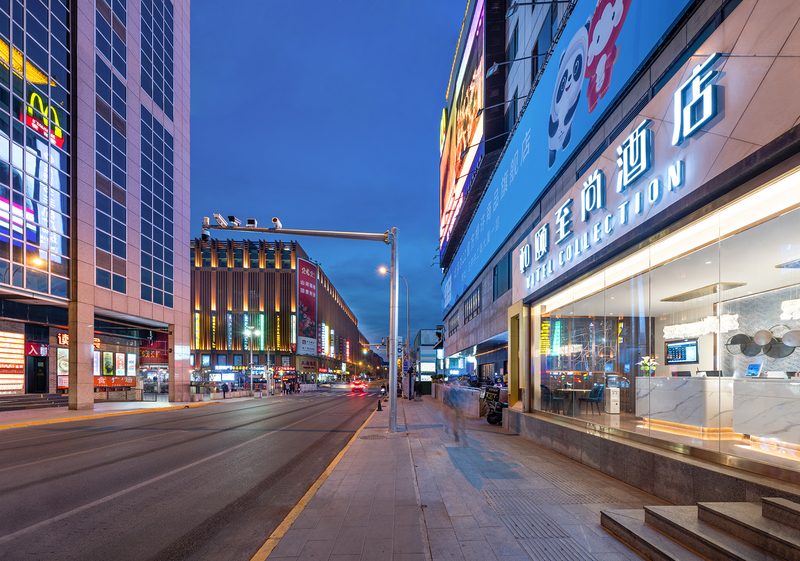
Yitel (Beijing TiananmenWangfujing Subway Station)
From $85 / night
Check Prices on Trip.com →

February weather, activities, events & insider tips
Long-run averages for February
Weigh the advantages and considerations before booking
Top things to do during your visit
February settles over Beijing like a held breath. The capital's wide boulevards and imperial courtyards sit under pale, enormous skies. The air is so dry it cracks your lips within hours of landing. Daytime temperatures hover near 6°C, cold enough to redden your cheeks but rarely brutal enough to keep you indoors. Nights drop well below freezing to around minus four. Rainfall is nearly nonexistent. Barely five millimeters for the entire month. That means day after day of sharp winter light, the kind that turns the golden roof tiles of the Forbidden City into liquid fire and throws long blue shadows across the hutong alleyways. You will smell roasted chestnuts and candied hawthorn from sidewalk vendors, their braziers hissing against the chill. You'll hear the crunch of frost under your boots along the grey-brick lanes of Nanluoguxiang. This is Beijing at its quietest and most meditative. The summer throngs that fill the Temple of Heaven and pack the corridors of the Summer Palace thin to a trickle. You can walk entire sections of the Great Wall with nothing but wind and your own breathing for company. Locals move between heated restaurants and steaming noodle shops, ordering bowls of zhajiangmian thick with fermented soybean paste or platters of lamb hot pot that fog the windows. The cold demands layering. A proper down jacket, thermal underlayers, gloves you can operate a phone with. It rewards you with a city stripped to its architectural bones, every cornice and carved eave visible against that enormous winter sky. Beijing in February does not perform for tourists. It simply exists, ancient and unhurried, and invites you to match its pace.

A private vehicle collects you from your Beijing hotel before dawn and drives north through the Huairou district, where bare persimmon trees line the road and frost silvers the farmhouse rooftops. The Mutianyu section of the Great Wall develops along a forested ridge, its watchtowers stepping up and down the granite spine of the mountains like vertebrae. In February the crowds that choke this stretch in summer simply do not exist. You climb stone steps worn smooth by six centuries of feet, the cold air tasting of pine resin and dry earth. At the higher guard towers the silence is so complete you can hear ravens banking in the thermals below.

This full-day excursion stitches together two of China's most staggering historical sites by loading you onto a high-speed train from Beijing West Station to Xi'an, where a waiting guide drives you straight to the excavation pits housing the Terracotta Warriors. The bullet train covers the distance in roughly four and a half hours, the Hebei and Shaanxi plains scrolling past at 300 kilometers per hour. Winter wheat fields dusted with frost, the Yellow River gorge a brown gash in the plateau. Inside Pit One, the scale hits you physically. Thousands of life-sized clay soldiers standing in precise military formation under a hangar-like roof, each face individually modeled, their original lacquer pigments long since faded to the color of dry riverbed clay. The smell of damp earth rises from the excavation floor, a reminder that these figures spent two millennia underground.

This all-inclusive itinerary removes every logistical friction point between your Beijing hotel and the Mutianyu ramparts. A private car, an English-speaking guide who has walked these battlements hundreds of times, entrance tickets, a cable car ride, and a sit-down lunch at a village restaurant at the wall's base where the dumplings arrive steaming in bamboo baskets, their pork-and-chive filling fragrant enough to cut through the February cold. The guide calibrates the hike to your fitness, choosing a section of the wall that matches your appetite. The gentle, photo-friendly stretch near tower six, or the steeper, wilder western end where crumbling brickwork gives way to raw stone and the wind smells of juniper. The included lunch alone distinguishes this from bare-bones transfers. You eat where the village families eat, not at a tourist canteen.

This private tour pairs the Mutianyu Great Wall with the Summer Palace in a single day, a combination that gives you both the raw mountain drama of the Wall and the refined imperial aesthetics of the Qing dynasty's lakeside retreat. At the Summer Palace, Kunming Lake freezes solid in February, its surface a vast white plane that local residents use for ice-skating. The Long Corridor's 14,000 painted panels, each one depicting a scene from Chinese mythology or landscape, glow under the low winter sun in colors so saturated they look freshly applied. The scent of incense drifts from the Buddhist temple complex at the hill's summit, mixing with the clean bite of frozen air off the lake. Your guide sequences the two sites so that you hit the Wall in the morning cold, when the light is raking and golden, and the Summer Palace in the warmer afternoon.

From a kitchen in Beijing, a chef with decades of training in northern Chinese cuisine walks you through the architecture of a proper jiaozi. The pleating technique that seals the crescent without a single leak, the dough hydration that produces a wrapper thin enough to see your fingertips through, the filling ratios that distinguish a street-stall dumpling from a restaurant-grade one. This is a live online class, meaning you cook in your own kitchen while following the chef's hands on screen. The interactive format allows real-time correction of your technique. The session typically extends beyond dumplings into a second Beijing dish, often zhajiangmian or scallion pancakes. The chef explains why northern Chinese cooking relies so heavily on wheat rather than rice, a culinary geography lesson rooted in the dry, cold plains surrounding Beijing. You will taste the difference between store-bought wrappers and the ones you just rolled. The handmade version has a faintly sweet, wheaty chew that no factory product replicates.

This guided hike covers five kilometers of the Mutianyu wall. A distance that sounds modest until you factor in the elevation changes between watchtowers, where stone steps pitch upward at angles steep enough to make your thighs burn and the cold February air scours your throat with each deep breath. A cable car lifts you to the midpoint of the restored section, and from there the guide leads you along the parapet, pointing out Ming-dynasty construction details invisible to the untrained eye. The drainage channels cut into the walkway to shed summer monsoon rain, the arrow loops sized for crossbow bolts, the hollow interiors of the watchtowers where garrisons once slept on stone platforms. The five-kilometer route ends at a tower overlooking a valley so thickly forested with Mongolian oaks and chestnuts that even in February, stripped of leaves, the branches form a grey-brown canopy dense enough to muffle sound. The descent is by toboggan, a steel-railed slide that swoops down the mountainside, the cold wind pressing tears from your eyes as you bank through the curves.
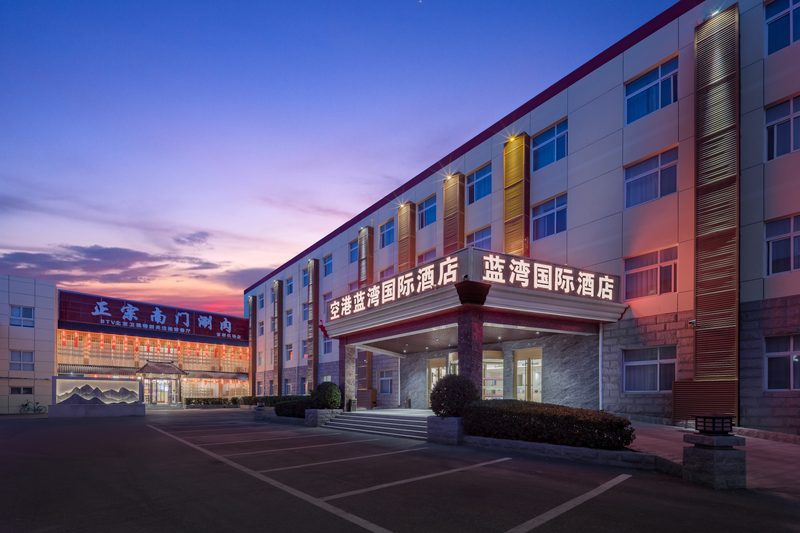
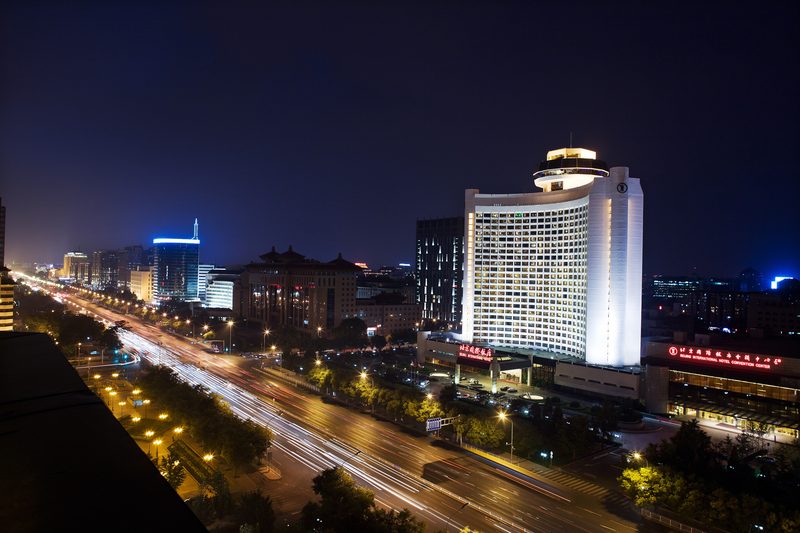
Hand-picked hotels across price tiers for February travellers.
Dates that affect opening hours, transport and crowds
Known in English as Chinese New Year (Spring Festival). Observed nationwide as a public holiday.
Bookmark this page — your progress is saved between visits
Climate-specific gear, brand recommendations, and what to leave at home.
View Beijing Packing List →Insider knowledge and common pitfalls to avoid
Now that you've got the research covered, here's where to go next.
Didn't see anything interesting yet?
Browse Viator's full catalog of tours, day trips, food experiences, and private guides in Beijing.
See All Beijing Tours on Viator